

Leadership, Development and the Future We Cannot Ignore
By Bayo Aregbesola
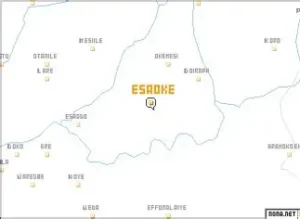
Esa Oke is a town richly endowed with unexplored vast natural resources, huge historical significance, and exceptional human capital. From its scenic hills and mineral potentials to the remarkable achievements of her sons and daughters across Nigeria and around the world, few communities can boast such an abundance of assets. Yet, despite these obvious advantages, much of Esa Oke’s potentials remain unrealized. As social challenges intensify and development opportunities continue to slip away, the time has come for all stakeholders to unite behind a bold and coordinated vision capable of unleashing the town’s immense promise.
What makes this reality particularly painful is that Esa Oke is equally blessed with accomplished, patriotic, and committed sons and daughters who have consistently demonstrated a passion for the progress of their hometown. The visionary leadership of the late Oba Isaiah Ajayi Adeniran, Afinbiokin II, who reigned as the Ọwá Omiran of Esa Oke from November 1954 to April 2004, was complemented by the extraordinary contributions of the late Chief James Ajibola Ige, the renowned Cicero of Esa Oke, and numerous other distinguished indigenes, whose services and sacrifices have helped shape the community’s development trajectory.
Despite these blessings, lately, many of our young people face limited opportunities and have become vulnerable to social vices, including drug abuse and political exploitation. Some are recruited as political thugs during election periods only to be abandoned once the election cycle is over, leaving the community to bear the brutal consequences of their acquired perverted lifestyle. This should be a matter of concern to every stakeholder who genuinely desires a brighter future for Esa Oke.
While it is true that the current economic hardship is a national challenge and not unique to our community, this reality should not prevent us from pursuing local solutions. Indeed, there is significant potential for a private sector-led development strategy that can complement government interventions whenever they materialize. The solution lies in collective action.
What Esa Oke needs is a clear and comprehensive development framework that brings together traditional institutions, government, the private sector, community organizations, and the diaspora. We must deepen our investments in education, healthcare, entrepreneurship, job creation, and youth empowerment.
In this regard, the role of the Esa Oke elites cannot be overemphasized. The town needs its own version of a Marshall Plan, a strategic development agenda designed to reset priorities, mobilize resources, harness talent, and drive sustainable progress. While development must ultimately be inclusive and community-driven, experience across the world demonstrates that transformative change is often initiated by individuals and groups with the influence, resources, expertise, and networks to galvanize broader participation.
It is within this context that the recent interventions of High Chief Balogun Edward Omotoso and Otunba Akin Adaramola regarding the selection process for a new Ọwa Omiran deserve commendation. Their engagement reflects not only responsible citizenship but also a recognition of the moral obligation that influential members of a community have to safeguard its future through transparent, thoughtful, and principled decision-making. Anyone genuinely concerned about the future of Esa Oke cannot afford to remain detached from conversations and decisions that shape the town’s destiny. Silence on critical community issues often amounts to surrendering influence over the future we hope to build.
The principle they have advocated should extend beyond the selection of traditional leadership and apply equally to those aspiring to elective political office. One practical approach would be for the Esa Oke Central Union (ECU), acting as a non-partisan institution, to organize periodic town hall meetings during election cycles. Such forums, held in a hybrid format, would provide equal opportunities for all candidates, irrespective of political affiliation, to present their vision for the development of Esa Oke. They would also enable both residents and members of the diaspora to engage directly (virtually) with aspiring leaders, assess their competence, character, and plans, and make informed decisions free from undue political pressure or influence.
It must also be acknowledged that many indigenes of Esa Oke are already making significant contributions to human capital development through educational initiatives and scholarship programs in Esa Oke. These commendable efforts should be expanded and complemented with greater investments in healthcare, entrepreneurship, vocational training, and strategic partnerships with the private sector. Such initiatives can help stimulate industrial growth, attract investment, and create sustainable employment opportunities for the town’s young population.
Equally important is the urgent need to rehabilitate and reintegrate our young people who have fallen victim to drug abuse and political manipulation. Sincerely, these young men and women are not lost causes. They remain an integral part of Esa Oke’s future. Any meaningful development agenda must include pathways for their recovery, empowerment, and productive reintegration into the society. A community that neglects its youth ultimately undermines its own future.
Esa Oke stands at a defining moment in its history. The town possesses the talent, resources, heritage, and collective goodwill required to chart a new path toward sustainable progress. What is needed now is a shared vision, courageous leadership, strategic collaboration, and a firm commitment to action.
The future of Esa Oke cannot be left to chance. It requires a comprehensive development framework and a collective determination to transform potential into prosperity.
Indeed, Esa Oke needs all hands on deck. The time to act is now!
Adebayo (Bayo) Aregbesola, a scion of Gogodudu (Ananye) Ruling House, writes from Ottawa, Canada. He is a public servant with the Government of Canada and is passionate about community development and public service.